What if the contradictions in the Bible aren't problems to explain away—but invitations to read differently?
You've noticed them. The two creation stories that don't match. The God who commands "thou shalt not kill" but orders genocide. The Gospels that can't agree on basic facts about Jesus's birth and death. The passages that seem to contradict each other on fundamental questions.
You've been told these contradictions don't exist, or they can be harmonized if you just try hard enough. But what if there's another way?
The Developing Word shows you that the Bible itself models development, reinterpretation, and evolution of understanding—and invites you into that same journey.
Both Paul and James were brilliant, sincere, deeply committed to what they believed was divine truth. Both built communities around their convictions. Both were willing to suffer for their beliefs. And they were in fundamental disagreement. Perhaps the most important question isn't 'Which one was right?' but rather 'What does their conflict teach us about holding our own convictions?'
If they could both be so certain and so contradictory, what does that say about our own certainties?
The gift of uncertainty isn't the absence of belief—it's the humility to recognize that our deepest convictions are human interpretations of encounters with the sacred. It's the capacity to say 'I believe this deeply AND I might be wrong' simultaneously. It's holding the paradox that Professor [or: As one of my seminary professors once said]: 'I have my beliefs and I live by them. However, I know that any number of my beliefs could be wrong. The problem is I don't know which ones those are.'
This doesn't weaken community—it actually enables what we might call genuine communion: being bound together not by shared certainty, but by shared seeking. Not by having all the same answers, but by being willing to wrestle with the same questions.
When being right becomes more important than being human, we all lose.
An eighteen-year-old brings flowers to dinner, hoping to make a good impression on a girl's family. By the end of the evening, he's rejected—not for anything he said or did, but for a political label someone assigned to him.
This is where we are. Sorting each other into camps before we know each other's names. Rejecting humans because of positions. Building armies to fight enemies we've created from neighbors, friends, and family members who simply see the world differently.
But it doesn't have to be this way.
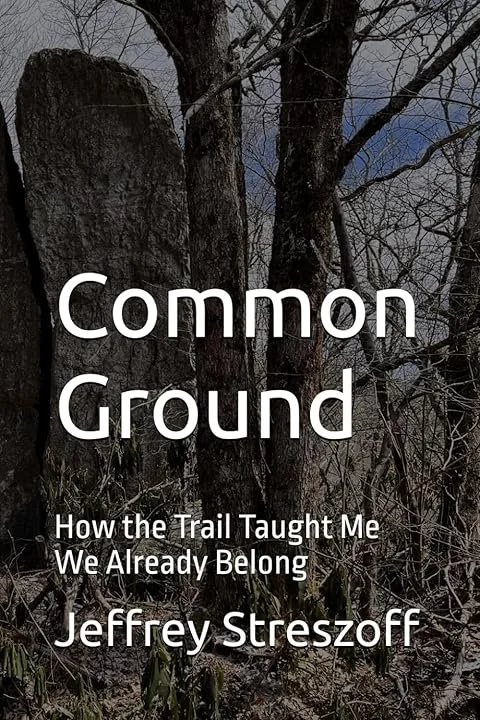
What if the certainty we've been taught to project as leaders is actually the enemy of genuine faith and authentic partnership?
In this profound reimagining of his 2018 book Creating Essential Partnerships, Jeffrey Streszoff draws on seven years of additional study in Stoic philosophy, Christian theology, and hard-won experience on the Appalachian Trail to explore a fundamental distinction: the difference between community built on shared certainty and communion built on shared seeking.
Most leadership books promise clarity, control, and measurable results. This one offers something different—and more honest.
What do you do when your church is falling apart, your community is rebuilding from a tornado, and you're one panic attack away from breaking?
You walk into the mountains carrying everything you need on your back.
In March 2023, United Methodist pastor Jeffrey Streszoff set out to hike over 100 miles of the Appalachian Trail during one of the harshest winters in recent memory. His church had just lost thirty members in a denominational split. His community was still recovering from a devastating tornado. And his phone had become an instrument of torture—every ring, every text another crisis demanding immediate attention.
The Staff Parish Relations Committee noticed the change in him and insisted: Take time off. Now.
So he did. And the trail began teaching lessons he didn't know he needed to learn.
This is not your typical hiking memoir.